HD IP cameras for homes, shops, offices, schools and industrial sites, with live and recorded footage on your phone or computer. Planned at a site survey, then installed and serviced by us.
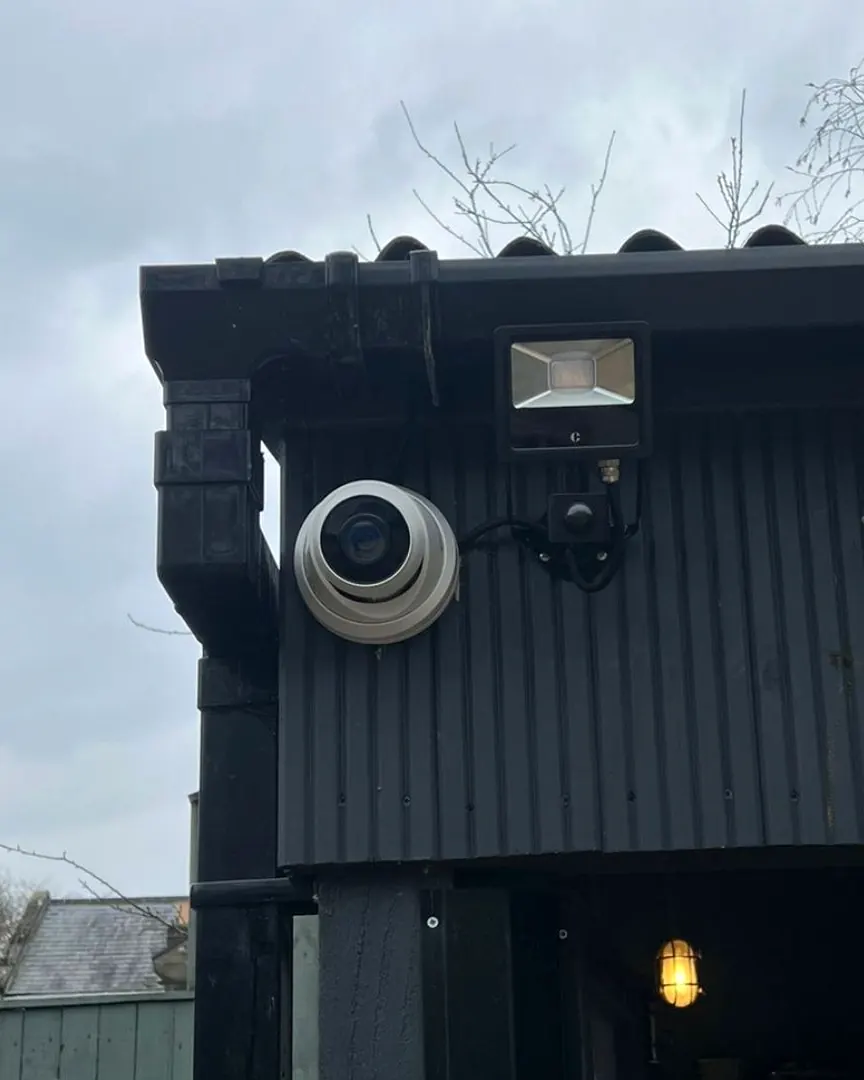
A dome camera and floodlight on black timber cladding.
Since2012Established in 2012, installing and servicing ever since
Google4.3From 17 reviews, October 2026
Offices2Brighouse and Harrogate, working nationwide
What CCTV does for a home, and for a business
At home, a visible camera puts off would-be intruders. You can check on the house from your phone, and if something does happen, from a parcel going missing to a break-in, you have it on record.
For a business, cameras deter theft, including theft from inside, help keep staff safe and give you recorded evidence when there is an incident or a dispute. On a shop floor or at reception they also show you who is at the door.
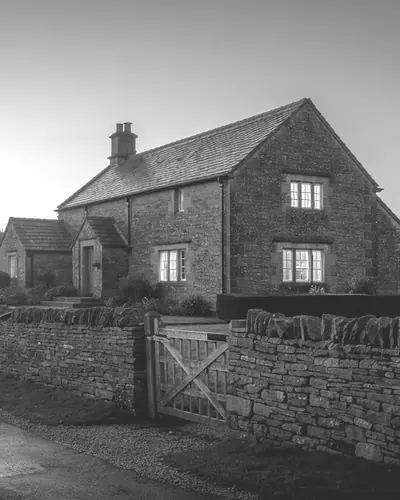
HomesA deterrent, a quick check from your phone and a record of what happened
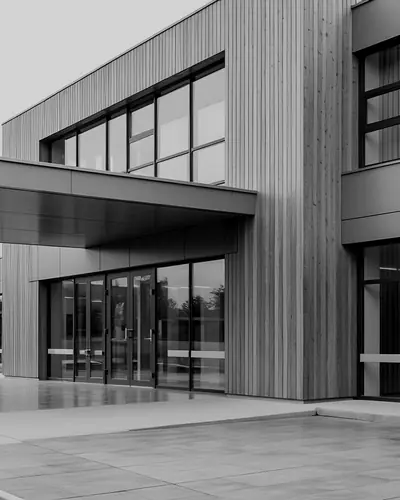
Shops and officesTheft and fraud deterred, staff safety, evidence when you need it
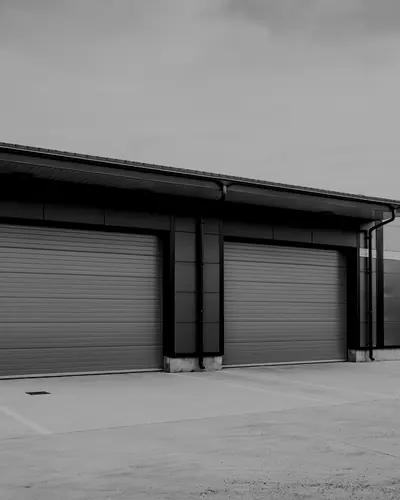
Industrial sitesYards, gates and stock covered while the site is closed
SchoolsEntrances and boundaries, with the privacy assessment done first
From our offices in Brighouse and Harrogate we install and maintain systems across West Yorkshire and North Yorkshire, and for clients nationwide.
HD IP cameras, planned around your property
We install HD IP CCTV: high-definition cameras that connect to your network, so you can see live and recorded footage from anywhere. Every system starts with a site survey, where we agree what each camera needs to see and where it should go.
High-definition cameras
Positioned to cover entrances, yards and the areas that matter to you, with as few blind spots as possible, and able to record in low light.
A recorder that keeps footage
Go back to the time of an incident and find it.
Viewing on your phone or computer
Live feeds and recordings on your smartphone or computer, at home, at work or away, with an alert when a camera detects movement.
Room to grow
IP systems work with your existing network and scale, so you can add cameras later without starting again.
Cameras and recorders
Indoors, outdoors, on walls and fences
We fit turret and dome cameras inside and out, using equipment from established CCTV manufacturers. Each camera is chosen at the survey for the view it needs.
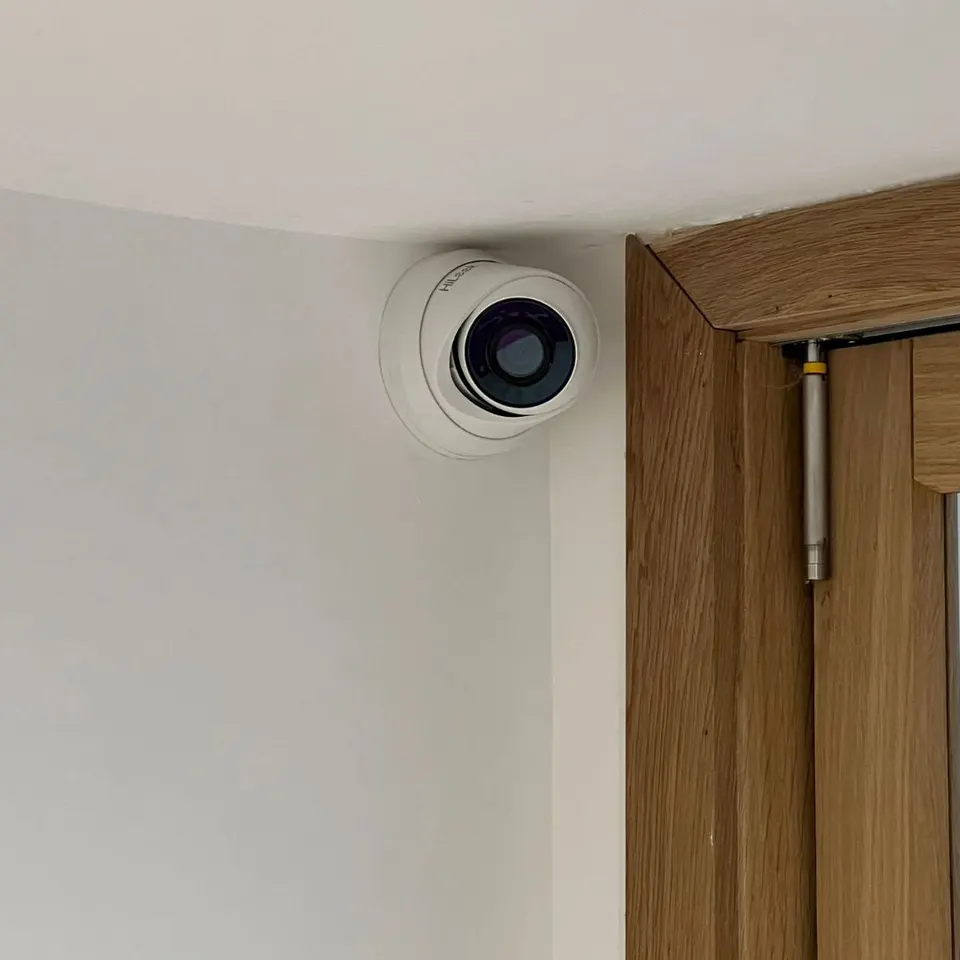
IndoorsA turret camera high in the corner of a room
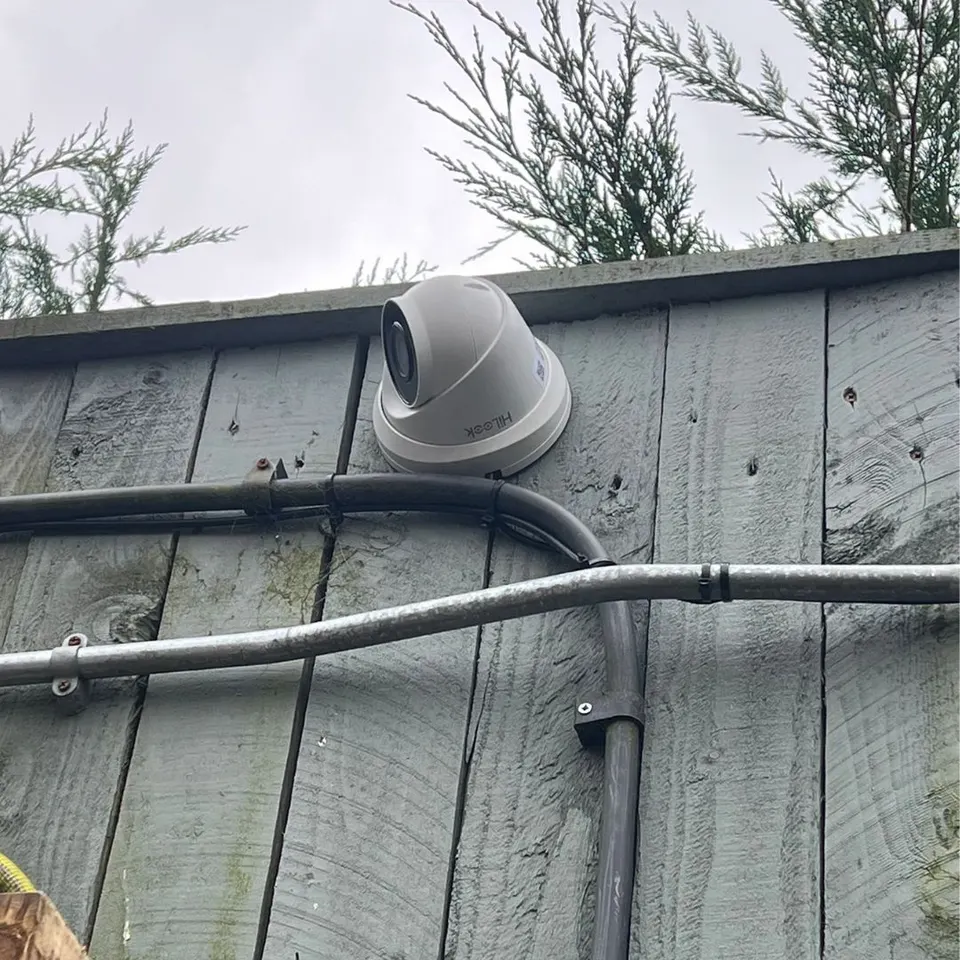
OutdoorsA turret camera on a timber fence, cabled in conduit
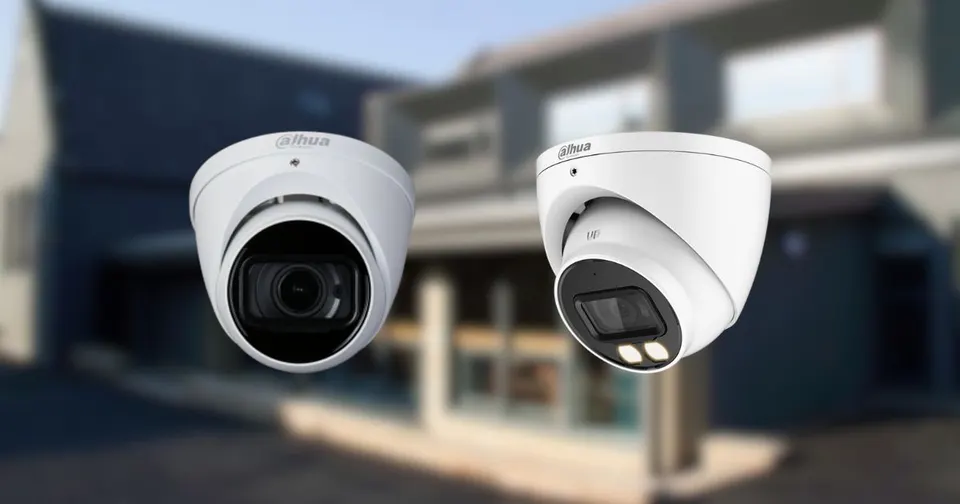
Turret camerasCompact HD cameras for walls, eaves and ceilings
ICO guidance
Cameras, privacy and the law
Whoever runs a CCTV system is responsible for using it lawfully, and the Information Commissioner’s Office (ICO) sets out what that means. Read it before you decide where your cameras go.
A business using CCTV is a data controller. The ICO expects a data protection impact assessment before cameras go in, in most cases, and most businesses with CCTV will need to pay the ICO data protection fee. Recording audio should be off unless there is an exceptional reason.
2Images are recorded for crime prevention and staff safety.
3How to reach them: a phone number or email
What a CCTV sign should tell people.
Signs
Clearly visible before people enter the area, saying who runs the system, why, and how to contact you. A notice on your website is not enough on its own.
Neighbours
At home, point cameras at your own property. If they capture beyond your boundary, data protection law applies to you.
Storage
Keep footage only as long as you need it for its purpose. There is no fixed period, and spare space on the recorder is not a reason to keep it.
Out of hours
Watched when you are not there
A recorder tells you what happened after the event. If your premises stand empty at night or over the weekend, cameras can send alerts to an alarm receiving centre we work with, 24 hours a day. See remote CCTV monitoring for business premises.
Cameras also work well alongside an alarm. An intruder alarm raises the alert, and the cameras show what set it off.
Need NDAA-compliant cameras?
If your specification asks for NDAA-compliant CCTV, we can supply and install equipment to meet it. In the UK it is a buying requirement that some organisations set, not the law.
What NDAA means for UK buyers
A US law
Section 889 of the US National Defense Authorization Act for 2019 stops US government agencies and their contractors using video surveillance equipment from certain named Chinese manufacturers, including Hikvision and Dahua.
Not UK law
No UK law requires NDAA compliance, and most private buyers can choose freely.
Who asks for it
Some schools, public bodies and contractors write it into their specifications. Since November 2022 UK government departments have been told not to fit cameras from companies subject to China’s National Intelligence Law on sensitive sites.
What to do
Tell us at the survey if your specification includes it, and check each make and model on the quote against it.
Cameras get knocked out of line, lenses get dirty and recorders can stop without anyone noticing until footage is needed. A maintenance visit checks every camera, the recorder and remote viewing. If cameras are offline now or the app has stopped connecting, report the fault.
Temporary CCTV and camera towers for construction sites are handled by our Site Security division at No Entry Site Security.
Common questions
Something else? Call 0800 107 5345 or ask at your survey.
Do I need CCTV signs?
If you are a business, yes. Signs need to be visible before people enter the area covered and should say who operates the system, what it is for and how to contact you. At home, the ICO advises signs too if your cameras capture anything beyond your own boundary.
How long can I keep footage?
Only as long as you need it for the reason you have cameras. The ICO sets no fixed period. Most recorders can overwrite older footage automatically after a set time.
Can my camera point at my neighbour’s garden?
Aim cameras at your own property. If one captures a neighbour’s garden or the street, data protection law applies to you, so you need signs, secure storage and regular deletion, and you must answer requests for footage. Repositioning or masking that part of the view is simpler.
Is viewing my cameras on my phone secure?
Since 29 April 2024, connectable cameras sold to consumers in the UK must not come with a universal default password, and makers must state how long they will provide security updates. Use a strong password of your own, and keep the app and recorder updated.
Can you look after CCTV another company fitted?
Often, yes. Tell us the make of recorder and cameras and we will tell you whether we can service and repair it.
Protection doesn’t stop here.
Most buildings need more than one system. One company can install them, keep them serviced and put them right when something goes wrong.
 NO ENTRY Fire & Security