Electric gate safety inspections and force testing.
A powered gate is a heavy machine that closes on its own. An inspection checks it is safe to keep using. We safety and force test automated gates and barriers, and issue a certificate once a gate passes.
StandardBS EN 12453The current standard for powered gates in useBS EN 12453:2017+A1:2021
Commercial gates6 monthsGate Safe: serviced at least every six months by a trained installerPrivate homes: follow the manufacturer's recommendation
Your recordCertificateIssued once a gate passes its safety and force tests
Offices2Brighouse and Harrogate, working nationwide
Why gate safety checks matter
Gate Safe, a registered charity, was set up in 2010 after two young children died that year in separate incidents, each trapped by a closing sliding gate. The Health and Safety Executive issued a safety alert the same year. In both cases the gate’s closing force was not limited, and nothing detected that someone was in the way.
Faults in a gate’s safety devices are not always visible from the driveway or the car park. Regular inspection and force testing are how they get found and fixed. This page covers gates already in use. For new gates or automating existing ones, see our gates page.
Who is responsible for a powered gate?
That comes down to who owns the gate and where it is. This is a summary of the HSE framework, not legal advice. If you are unsure what applies to your site, check with your health and safety adviser or your insurer.
Who is responsible for a powered gate, and what applies
Who
What applies
Businesses, schools, landlords and managing agents with a gate at a workplace, including car parks and private roads
The Workplace (Health, Safety and Welfare) Regulations 1992 require workplace gates to be maintained.
Section 3 of the Health and Safety at Work etc Act 1974 covers your duty to people who are not your employees, such as visitors and the public.
PUWER 1998 can also apply where the gate is work equipment or part of a work process.
Homeowners with a private gate
Health and safety law does not apply to privately owned domestic gates, but owners can still be liable under the Occupiers’ Liability Acts.
Anyone supplied with a new powered gate
It should come with user instructions and a Declaration of Conformity in English, under the Supply of Machinery (Safety) Regulations 2008.
Whatever the site, a gate that is dangerous should be taken out of use until it is put right. (HSE: powered gates)
The force test
What a force test measures
The current standard for powered gates in use is BS EN 12453:2017+A1:2021. It limits the force a closing gate can exert at its edges, measured with calibrated equipment when the gate is commissioned and again during maintenance.
HSE guidance adds that force limitation on its own is unlikely to be reliable enough where the public or children are present. Those gates also need presence detection, such as safety edges and photocells, and an emergency release that works.
We carry out safety and force tests on the gates we look after, and give you a certificate when a gate passes.
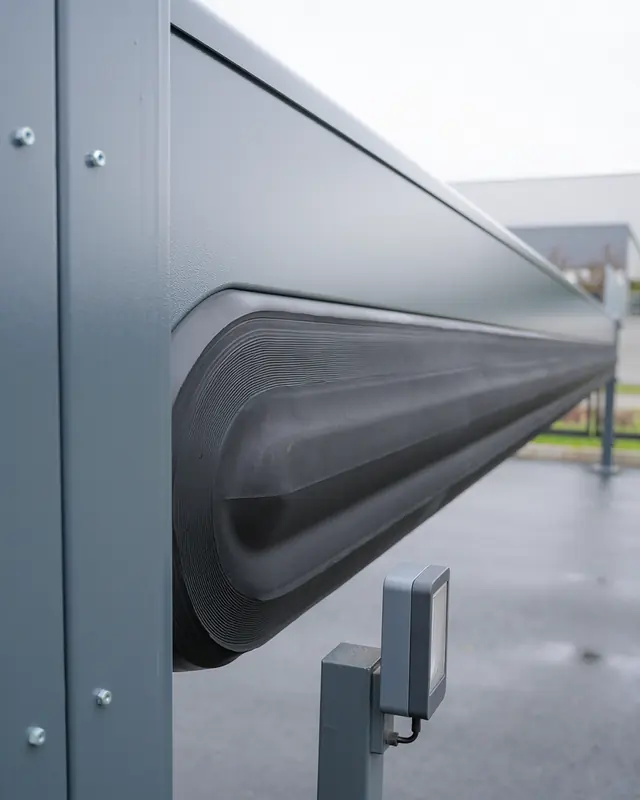
Force testing a gate’s closing edge
What the test measures
1The closing edgeWhere BS EN 12453 limits the force a closing gate can exert
2Calibrated equipmentMeasures that force at commissioning and again during maintenance
Also needed where the public or children are present
3Safety edgePresence detection on the closing edge
4PhotocellsPresence detection across the opening
5Emergency releaseOne that works, so the gate can be moved by hand
What happens on an inspection
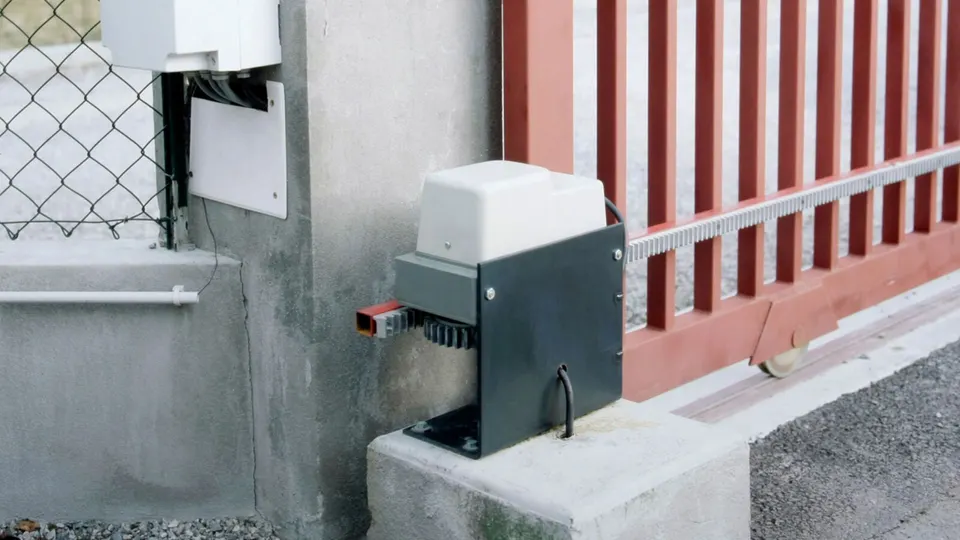
A sliding gate motor and its drive rack.
On an inspection we check these things.
Closing forcea force test at the gate’s closing edges. The standard is BS EN 12453.
Safety devicesthat the safety edges and photocells detect an obstruction and the gate responds.
Emergency releasethat the gate can be released and moved by hand in a power cut or a fault.
Paperworkthe user instructions, Declaration of Conformity and maintenance records, where they exist.
Certificateissued once the gate passes its safety and force tests.
If something fails, we explain what needs fixing and can carry out the repair.
Your certificate
Once a gate passes its safety and force tests, we issue a certificate. Keep it with the gate’s maintenance records. It is the record an insurer, a school’s governors or a managing agent may ask to see.
A certificate records that the gate passed on the day it was tested. It does not replace regular servicing, and a gate that later behaves differently should be checked again.
What the certificate shows
Certificate
Automated gate: safety and force tests
Gate
Which gate, and its type
Site
The address of the site
Tested on
The date of the tests
Safety tests
Passed
Force tests
Passed
A pass on the day it was tested
File with the maintenance records
Not a replacement for servicing
How often should an electric gate be inspected?
Gate Safe recommends that commercial automatic gates are serviced at least every six months by a trained installer. For gates at private homes, it advises following the manufacturer’s recommendation, which is commonly six-monthly.
Gate Safe’s servicing advice, by type of gate
Gate
Gate Safe advice
Commercial, school or workplace gate
Serviced at least every six months by a trained installer
Gate at a private home
Follow the manufacturer’s recommendation, commonly six-monthly
Records and riskKeep the maintenance records. Owners, landlords and managing agents should also review the gate’s risk assessment from time to time, and whenever management of the site changes. (Gate Safe: how often should automatic gates be serviced)
Our scheduleGate Safe recommends commercial gates are serviced at least every six months; for homes, follow the manufacturer’s advice. We agree the interval with you. If we already look after your fire alarm or security systems, we can service your gate at the same visit where that suits, through servicing and maintenance.
Gate Safe
What “Gate Safe Aware” means
Gate Safe Aware installers have completed Gate Safe’s IIRSM-approved training and are listed on its register of trained installers. It is training and registration, rather than a certificate for a gate or an installation.
We are listed on the Gate Safe register of Gate Safe Aware installers. You can check any installer on the Gate Safe register by name or postcode.
From our offices in Brighouse and Harrogate we install and maintain systems across West Yorkshire and North Yorkshire, and for clients nationwide. That includes inspecting, testing and maintaining automated gates.
We also offer emergency call-out contracts for electric gates, for when a gate fails to open or close. If your site has fire alarms, intruder alarms or CCTV too, see fire and security for businesses.
Schools and nurseriesentrance and car park gates used by staff, parents and visitors
Factories and industrial sitesyard gates and barriers
Businesses and officescar park and site entrances
Homesdriveway gates
Common questions
Something else? Call 0800 107 5345 or ask on the visit.
What is a force test?
A measurement of the force a closing gate exerts at its edges, taken with calibrated equipment and compared with the limits in BS EN 12453. It is done when a gate is commissioned and again during maintenance.
My gate came with the house and has no paperwork. Can you check it?
Yes. We can carry out safety and force tests on a gate we did not install, and tell you what it needs.
Does health and safety law apply to my gate at home?
Not to a privately owned domestic gate. Owners can still be liable under the Occupiers’ Liability Acts if someone is hurt. Gate Safe advises following the manufacturer’s service recommendation.
Can I keep using a gate that is acting strangely?
No. Take it out of use until it has been checked, and call us.
How do I check an installer is Gate Safe Aware?
Search the Gate Safe register by company name or postcode.
Protection doesn’t stop here.
Most buildings need more than one system. One company can install them, keep them serviced and put them right when something goes wrong.
 NO ENTRY Fire & Security